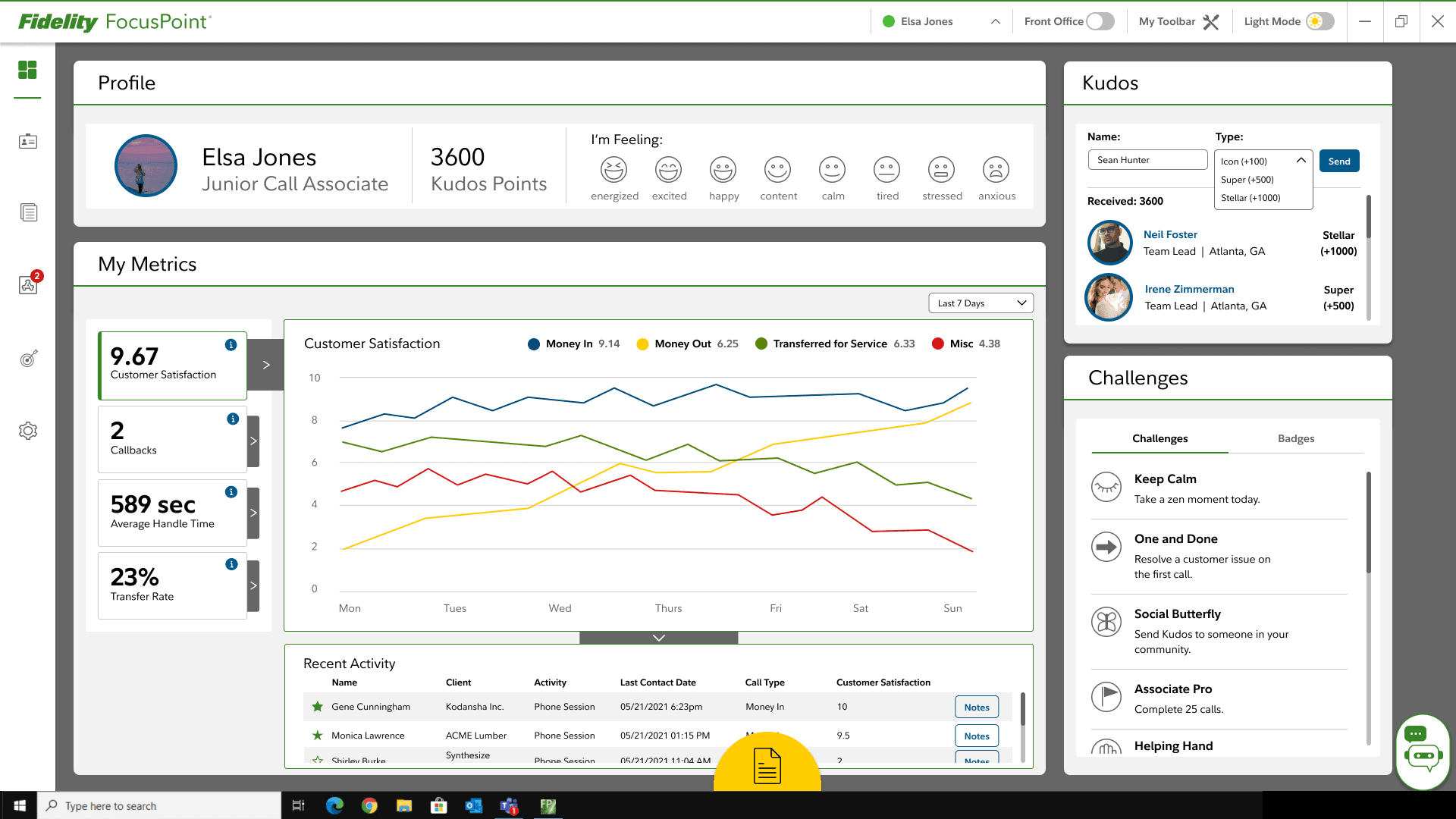
Customer Service Metrics Page

Customer Service Metrics Page

This project modernized an outdated call center interface to enhance the employee experience and reduce average call handling times. Through a collaborative, iterative process, we delivered a refreshed design system and a strategic roadmap to guide future development.

This project modernized an outdated call center interface to enhance the employee experience and reduce average call handling times. Through a collaborative, iterative process, we delivered a refreshed design system and a strategic roadmap to guide future development.

Company

Avanade

Role

UX Designer

Duration

6 Weeks

Stakeholders

Product Manager, Engineering, Cient

Platforms

Figma, Mural

OVERVIEW

OVERVIEW

OVERVIEW

I worked with a global investment firm to overhaul their customer service portal. We identified key pain point, created a refreshed deisgn approach, and define a user-focused path forward.

I worked with a global investment firm to overhaul their customer service portal. We identified key pain point, created a refreshed deisgn approach, and define a user-focused path forward.

I worked with a global investment firm to overhaul their customer service portal. We identified key pain point, created a refreshed deisgn approach, and define a user-focused path forward.

The Problem

The existing system was cluttered and technologically outdated, forcing associates to navigate a frustrating interface while trying to assist customers in real time. This friction slowed down information retrieval and request completion, ultimately hurting both the employee experience and the efficiency of the call center operations.

The Problem

The existing system was cluttered and technologically outdated, forcing associates to navigate a frustrating interface while trying to assist customers in real time. This friction slowed down information retrieval and request completion, ultimately hurting both the employee experience and the efficiency of the call center operations.

The Problem

The existing system was cluttered and technologically outdated, forcing associates to navigate a frustrating interface while trying to assist customers in real time. This friction slowed down information retrieval and request completion, ultimately hurting both the employee experience and the efficiency of the call center operations.

The Solution

The final deliverables included a rebranded visual design system, comprehensive low- and high-fidelity wireframes, and detailed journey maps that translate user pain points into a clear, actionable implementation roadmap. The end result increased employee efficiency and reduced average call handle time. Through a highly collaborative design process, we validated concepts with both clients and developers to ensure the new system was accessible and technically feasible.

The Solution

The final deliverables included a rebranded visual design system, comprehensive low- and high-fidelity wireframes, and detailed journey maps that translate user pain points into a clear, actionable implementation roadmap. The end result increased employee efficiency and reduced average call handle time. Through a highly collaborative design process, we validated concepts with both clients and developers to ensure the new system was accessible and technically feasible.

The Solution

The final deliverables included a rebranded visual design system, comprehensive low- and high-fidelity wireframes, and detailed journey maps that translate user pain points into a clear, actionable implementation roadmap. The end result increased employee efficiency and reduced average call handle time. Through a highly collaborative design process, we validated concepts with both clients and developers to ensure the new system was accessible and technically feasible.

RESEARCH

RESEARCH

RESEARCH

We translated user interviews into clear experience maps and journey flows that revealed how associates worked, where friction occurred, and where the redesign could have the most impact.

We translated user interviews into clear experience maps and journey flows that revealed how associates worked, where friction occurred, and where the redesign could have the most impact.

We translated user interviews into clear experience maps and journey flows that revealed how associates worked, where friction occurred, and where the redesign could have the most impact.

After several user sessions, we organized comments and sentiments into visual tools that helped us better understand the associate experience. We created experience diagrams that mapped actions before, during, and after a call, along with the positives and pain points at each stage. We also worked with stakeholders to build an empathy map capturing what associates say, think, feel, and do. These insights were then structured into a format that could be compared across current and future states. Using this foundation, we developed four current-state and two future-state journey maps that highlighted goals, actions, pain points, and direct quotes from our sessions. These maps clarified how associates navigate typical calls and helped us turn raw feedback into actionable design direction.
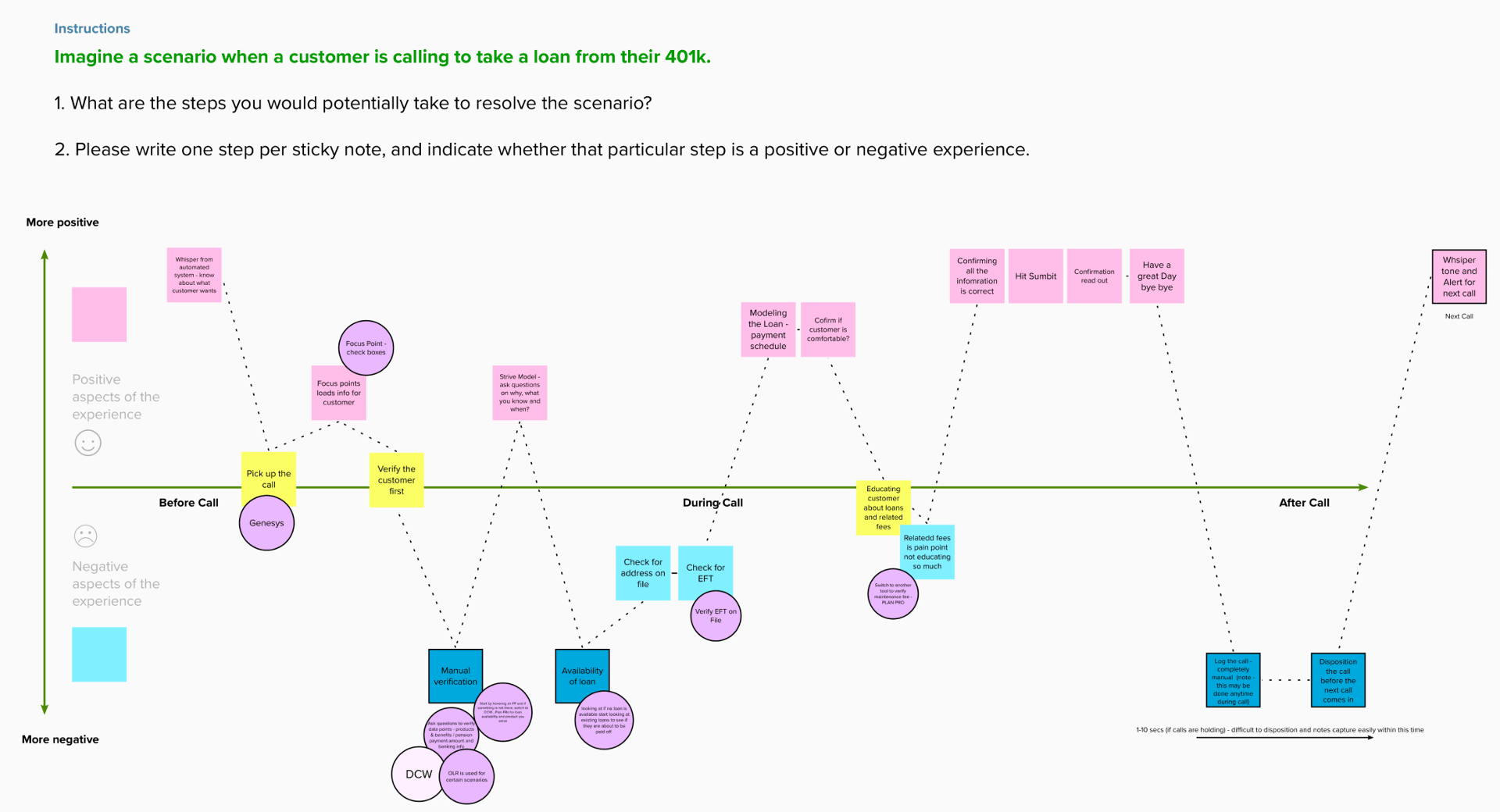
After several user sessions, we organized comments and sentiments into visual tools that helped us better understand the associate experience. We created experience diagrams that mapped actions before, during, and after a call, along with the positives and pain points at each stage. We also worked with stakeholders to build an empathy map capturing what associates say, think, feel, and do. These insights were then structured into a format that could be compared across current and future states. Using this foundation, we developed four current-state and two future-state journey maps that highlighted goals, actions, pain points, and direct quotes from our sessions. These maps clarified how associates navigate typical calls and helped us turn raw feedback into actionable design direction.
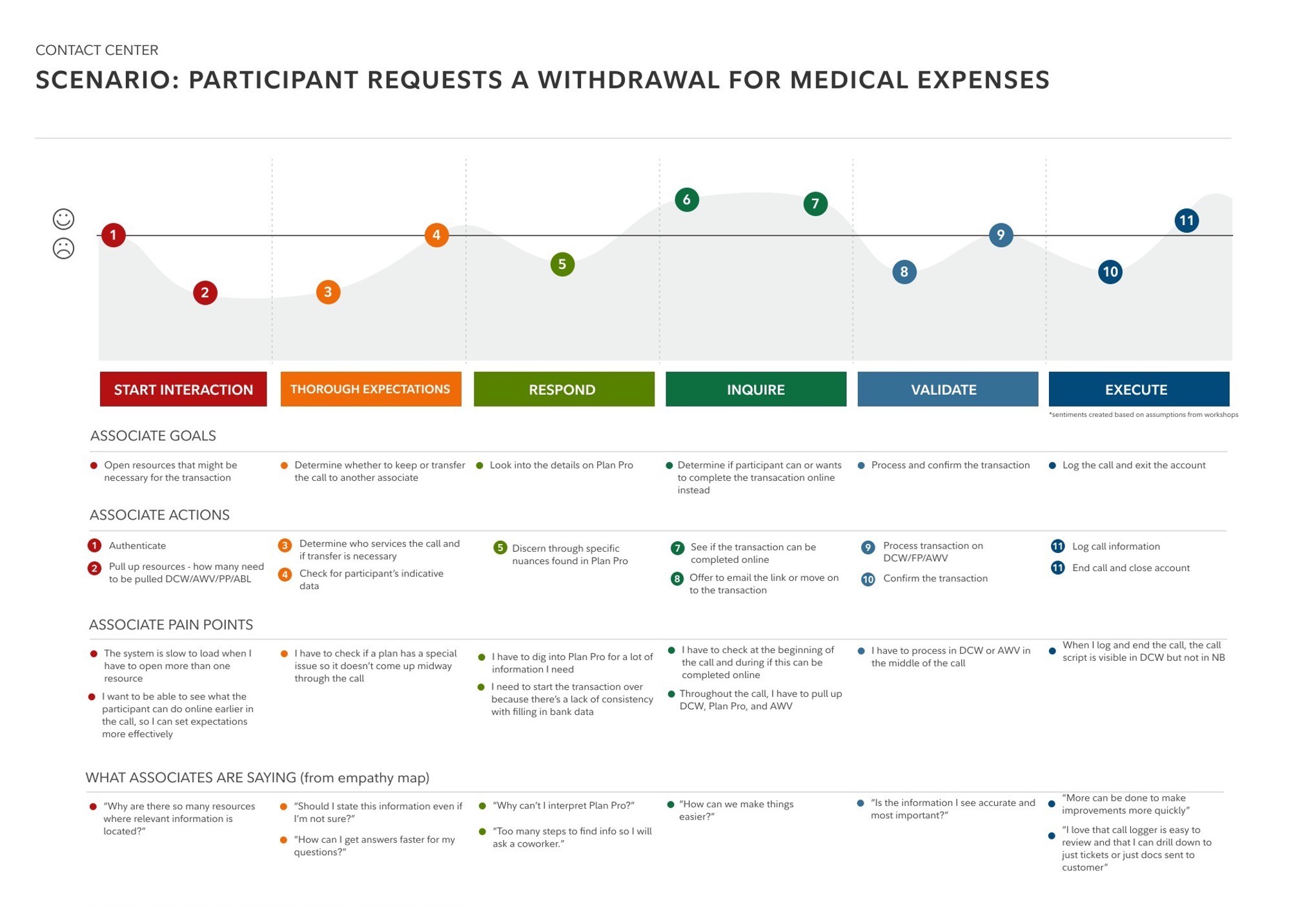
After several user sessions, we organized comments and sentiments into visual tools that helped us better understand the associate experience. We created experience diagrams that mapped actions before, during, and after a call, along with the positives and pain points at each stage. We also worked with stakeholders to build an empathy map capturing what associates say, think, feel, and do. These insights were then structured into a format that could be compared across current and future states. Using this foundation, we developed four current-state and two future-state journey maps that highlighted goals, actions, pain points, and direct quotes from our sessions. These maps clarified how associates navigate typical calls and helped us turn raw feedback into actionable design direction.
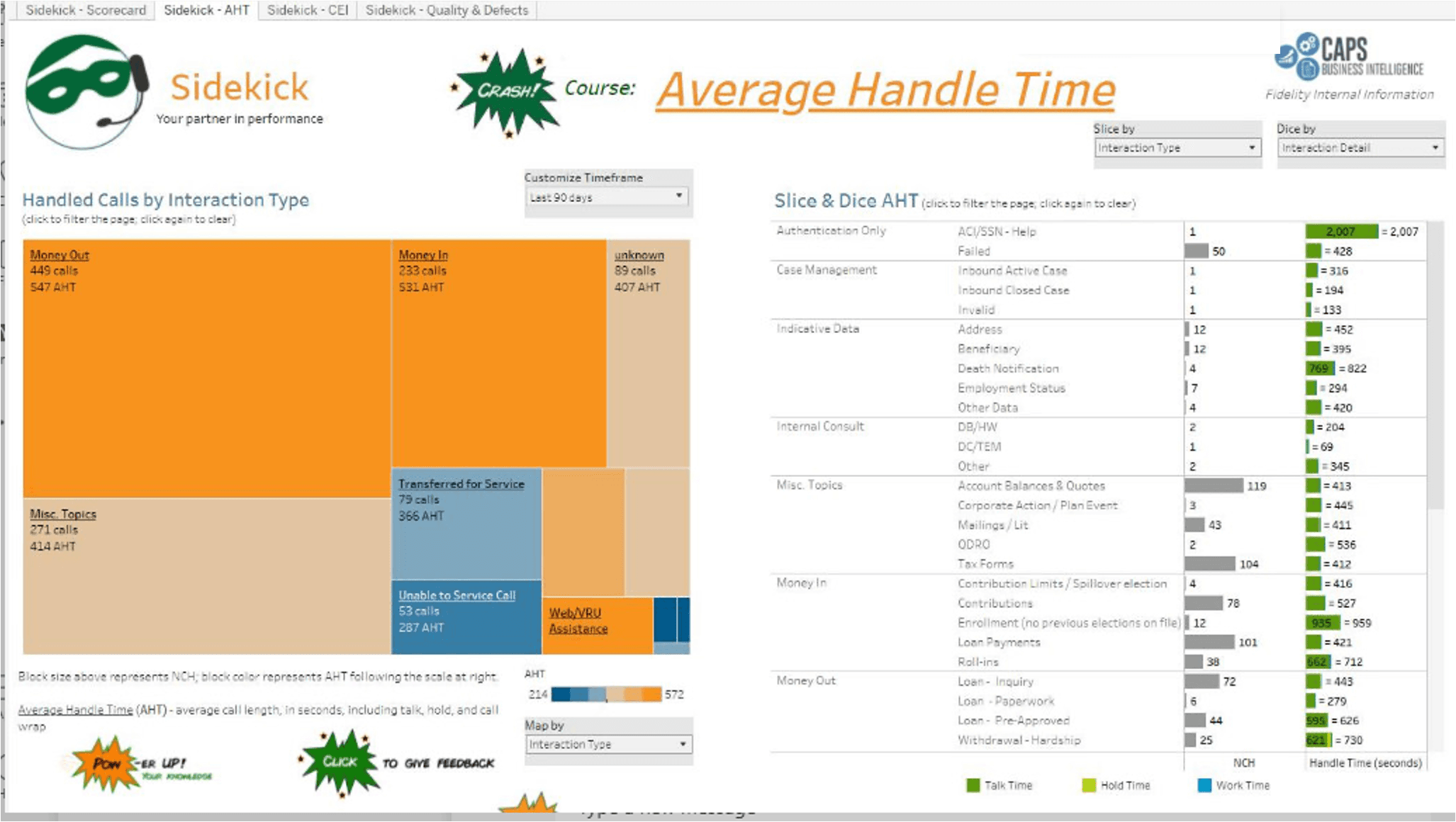
EXISTING PROBLEMS

EXISTING PROBLEMS

EXISTING PROBLEMS

We identified the major pain points in the current system that were holding agents and customers back.

We identified the major pain points in the current system that were holding agents and customers back.

We identified the major pain points in the current system that were holding agents and customers back.

Dated System

A cluttered, unintuitive interface slowed associates down and added unnecessary stress.

Dated System

A cluttered, unintuitive interface slowed associates down and added unnecessary stress.

Dated System

A cluttered, unintuitive interface slowed associates down and added unnecessary stress.

Lack of Customization

Associates were restricted by a fixed layout where rarely used tools still dominated screen space.

Lack of Customization

Associates were restricted by a fixed layout where rarely used tools still dominated screen space.

Lack of Customization

Associates were restricted by a fixed layout where rarely used tools still dominated screen space.

Difficult for New Joiners

The system’s 130+ features created a steep and overwhelming learning curve.

Difficult for New Joiners

The system’s 130+ features created a steep and overwhelming learning curve.

Difficult for New Joiners

The system’s 130+ features created a steep and overwhelming learning curve.

Stressful Work Environment

Associates spent extra time capturing post-call notes and summaries.

Stressful Work Environment

Associates spent extra time capturing post-call notes and summaries.

Stressful Work Environment

Associates spent extra time capturing post-call notes and summaries.

Poor Usability

Common tasks required too many clicks, and key customer data was hard to locate quickly.

Poor Usability

Common tasks required too many clicks, and key customer data was hard to locate quickly.

Poor Usability

Common tasks required too many clicks, and key customer data was hard to locate quickly.

Lack of Automation

The system relied entirely on associates to interpret customer intent and choose next steps.

Lack of Automation

The system relied entirely on associates to interpret customer intent and choose next steps.

Lack of Automation

The system relied entirely on associates to interpret customer intent and choose next steps.

SOLUTION

SOLUTION

SOLUTION

A redesigned metrics experience that centers on wellbeing, clarity, and meaningful engagement.

A redesigned metrics experience that centers on wellbeing, clarity, and meaningful engagement.

A redesigned metrics experience that centers on wellbeing, clarity, and meaningful engagement.

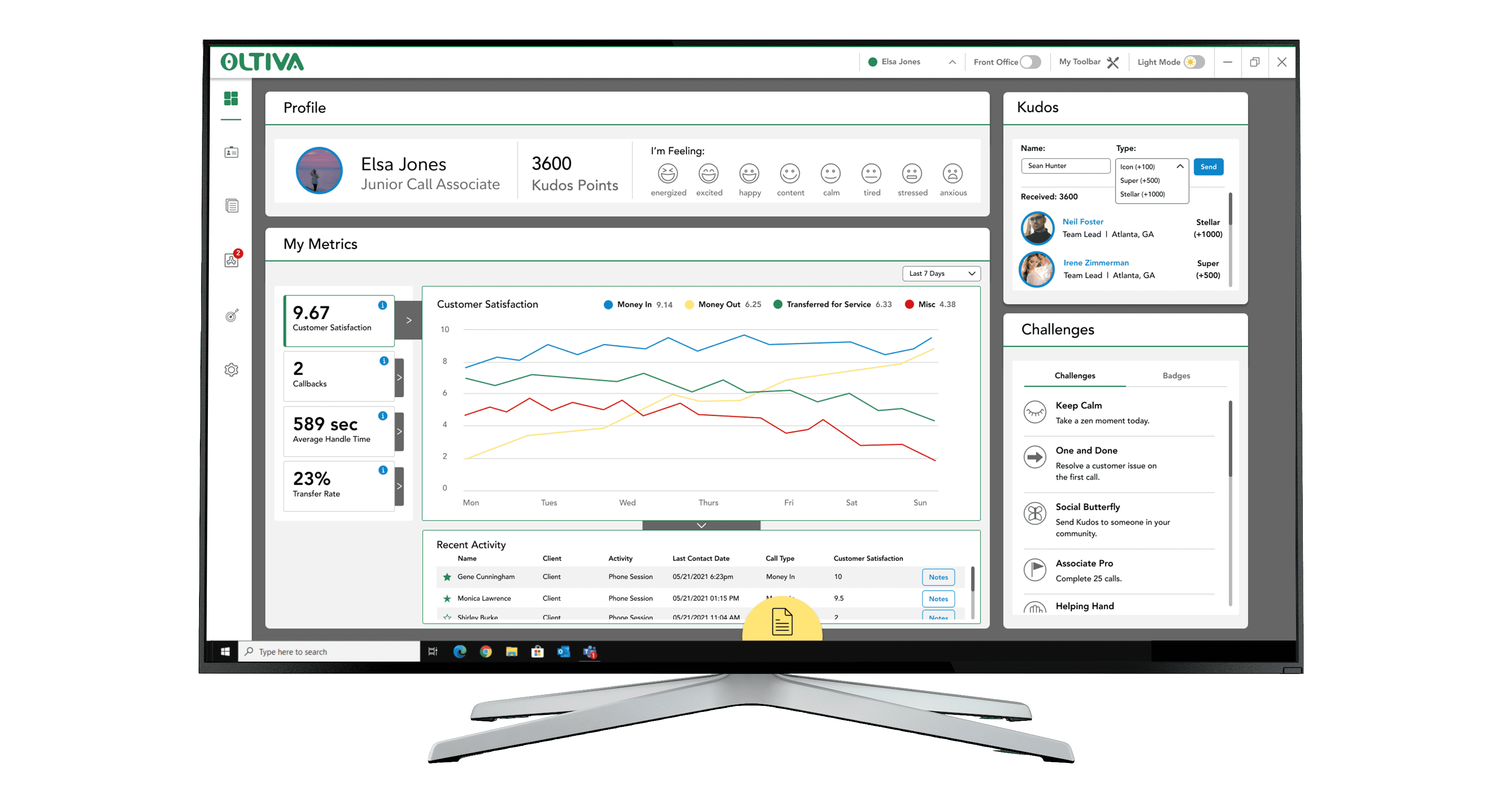
We focused on rethinking the metrics page to give associates a clearer, more personal view of their performance and wellbeing. The layout was simplified into three modules: a quick sentiment check-in, a community space for kudos and challenges, and a streamlined metrics area showing the most relevant insights. By refining the visual design system (grid, spacing, iconography, and interactive components) we brought consistency and clarity to the interface. The modular structure helps the page feel cohesive with the rest of the application while making the experience more intuitive and supportive for associates.

We focused on rethinking the metrics page to give associates a clearer, more personal view of their performance and wellbeing. The layout was simplified into three modules: a quick sentiment check-in, a community space for kudos and challenges, and a streamlined metrics area showing the most relevant insights. By refining the visual design system (grid, spacing, iconography, and interactive components) we brought consistency and clarity to the interface. The modular structure helps the page feel cohesive with the rest of the application while making the experience more intuitive and supportive for associates.

We focused on rethinking the metrics page to give associates a clearer, more personal view of their performance and wellbeing. The layout was simplified into three modules: a quick sentiment check-in, a community space for kudos and challenges, and a streamlined metrics area showing the most relevant insights. By refining the visual design system (grid, spacing, iconography, and interactive components) we brought consistency and clarity to the interface. The modular structure helps the page feel cohesive with the rest of the application while making the experience more intuitive and supportive for associates.

REFLECTIONS

REFLECTIONS

REFLECTIONS

We encountered many challenges, learned a lot, and identified areas we’d refine with more time. Joining mid-project meant quickly adapting to a new team, understanding the existing system’s pain points, and contributing right away. We saw how often client assumptions differ from what associates actually need, reinforcing the importance of user testing and understanding the real context of their workflow. With more time, we would have spoken further with associates about how metrics influence their day-to-day work and explored our early ideas for a smarter system that could suggest trainings or recommendations based on their performance data.

We encountered many challenges, learned a lot, and identified areas we’d refine with more time. Joining mid-project meant quickly adapting to a new team, understanding the existing system’s pain points, and contributing right away. We saw how often client assumptions differ from what associates actually need, reinforcing the importance of user testing and understanding the real context of their workflow. With more time, we would have spoken further with associates about how metrics influence their day-to-day work and explored our early ideas for a smarter system that could suggest trainings or recommendations based on their performance data.

We encountered many challenges, learned a lot, and identified areas we’d refine with more time. Joining mid-project meant quickly adapting to a new team, understanding the existing system’s pain points, and contributing right away. We saw how often client assumptions differ from what associates actually need, reinforcing the importance of user testing and understanding the real context of their workflow. With more time, we would have spoken further with associates about how metrics influence their day-to-day work and explored our early ideas for a smarter system that could suggest trainings or recommendations based on their performance data.