Performance Reporting Dashboard

Performance Reporting Dashboard

Design both a web and mobile personalized performance reporting dashboard for cryptoasset investors and conduct live user testing to ensure the viability, desirability, and usability of the end product.

Design both a web and mobile personalized performance reporting dashboard for cryptoasset investors and conduct live user testing to ensure the viability, desirability, and usability of the end product.

Company

Invictus Capital

Role

Product Designer

Duration

4 Weeks

Stakeholders

Product Manager, Engineering

Platform

Figma

OVERVIEW

OVERVIEW

OVERVIEW

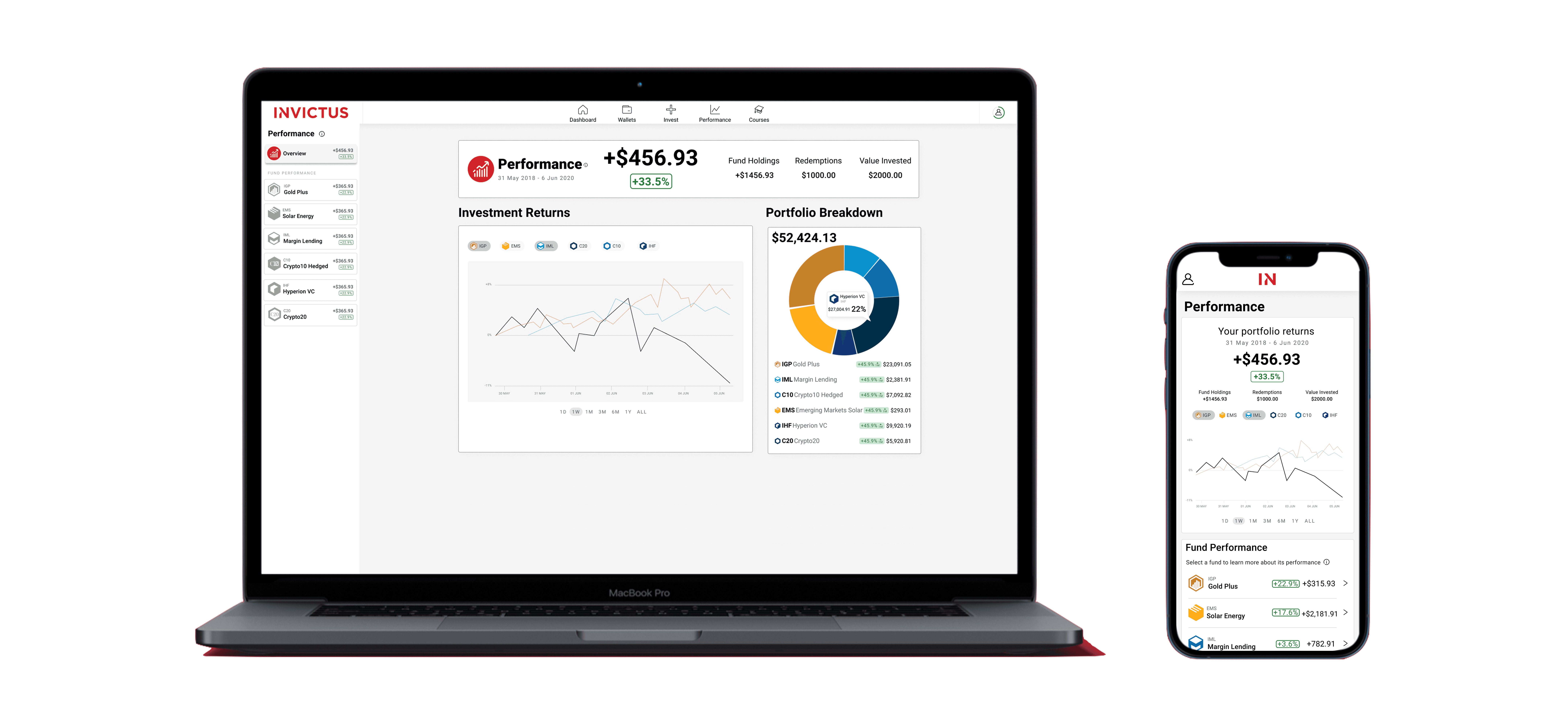
I worked with Invictus Capital to design a new performance dashboard that gave investors a clear, real-time view of their portfolios across web and mobile.

I worked with Invictus Capital to design a new performance dashboard that gave investors a clear, real-time view of their portfolios across web and mobile.

I worked with Invictus Capital to design a new performance dashboard that gave investors a clear, real-time view of their portfolios across web and mobile.

The Problem

The company needed a personalized performance dashboard that clearly showed users how their investments were performing in real time. Existing reporting made it hard to quickly understand portfolio performance, holdings, and where to learn more. The dashboard had to work across mobile and desktop/web and be designed in a late-stage startup environment where decisions had a big impact. I worked on a small cross-functional team with a project manager, an analyst, two developers, and two designers.

The Problem

The company needed a personalized performance dashboard that clearly showed users how their investments were performing in real time. Existing reporting made it hard to quickly understand portfolio performance, holdings, and where to learn more. The dashboard had to work across mobile and desktop/web and be designed in a late-stage startup environment where decisions had a big impact. I worked on a small cross-functional team with a project manager, an analyst, two developers, and two designers.

The Problem

The company needed a personalized performance dashboard that clearly showed users how their investments were performing in real time. Existing reporting made it hard to quickly understand portfolio performance, holdings, and where to learn more. The dashboard had to work across mobile and desktop/web and be designed in a late-stage startup environment where decisions had a big impact. I worked on a small cross-functional team with a project manager, an analyst, two developers, and two designers.

The Solution

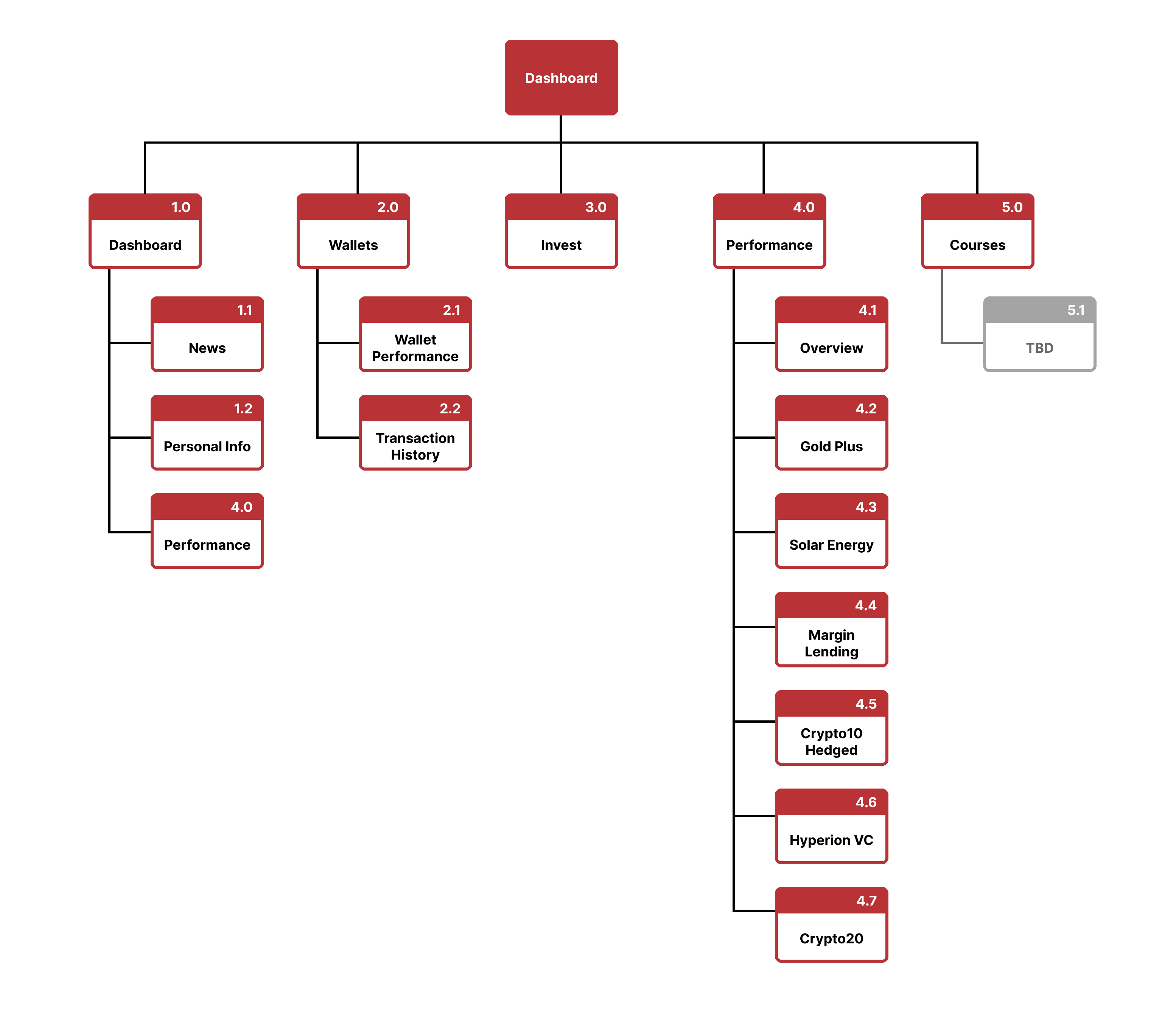
We designed a modular, personalized dashboard that highlighted key performance metrics first, with deeper portfolio and holdings details available as users dug in. The layout focused on quick clarity, using progressive disclosure to avoid overwhelming users. Shared components allowed the experience to scale across mobile and desktop, while educational content was embedded directly into the dashboard so users could learn in context. The final design balanced clarity, flexibility, and buildability to support a confident product launch.

The Solution

We designed a modular, personalized dashboard that highlighted key performance metrics first, with deeper portfolio and holdings details available as users dug in. The layout focused on quick clarity, using progressive disclosure to avoid overwhelming users. Shared components allowed the experience to scale across mobile and desktop, while educational content was embedded directly into the dashboard so users could learn in context. The final design balanced clarity, flexibility, and buildability to support a confident product launch.

The Solution

We designed a modular, personalized dashboard that highlighted key performance metrics first, with deeper portfolio and holdings details available as users dug in. The layout focused on quick clarity, using progressive disclosure to avoid overwhelming users. Shared components allowed the experience to scale across mobile and desktop, while educational content was embedded directly into the dashboard so users could learn in context. The final design balanced clarity, flexibility, and buildability to support a confident product launch.

RESEARCH

RESEARCH

RESEARCH

We combined user interviews, customer insights, and competitive analysis to understand investor needs and shape the dashboard’s structure and content.

We combined user interviews, customer insights, and competitive analysis to understand investor needs and shape the dashboard’s structure and content.

We combined user interviews, customer insights, and competitive analysis to understand investor needs and shape the dashboard’s structure and content.

Our research combined user feedback, customer support insights, and competitive analysis to understand investor needs. Existing support data highlighted recurring questions and points of confusion, showing where users struggled most. We built on this by interviewing investors to learn their goals, pain points, and expectations for the dashboard, which informed early journey maps, personas, and key themes. We also ran a competitive review across mobile and desktop, looking at robo-advisors, micro-investing tools, ETFs, and crypto apps. We focused on how each product structured information, presented performance data, and helped users understand complex concepts.
Our research combined user feedback, customer support insights, and competitive analysis to understand investor needs. Existing support data highlighted recurring questions and points of confusion, showing where users struggled most. We built on this by interviewing investors to learn their goals, pain points, and expectations for the dashboard, which informed early journey maps, personas, and key themes. We also ran a competitive review across mobile and desktop, looking at robo-advisors, micro-investing tools, ETFs, and crypto apps. We focused on how each product structured information, presented performance data, and helped users understand complex concepts.
Our research combined user feedback, customer support insights, and competitive analysis to understand investor needs. Existing support data highlighted recurring questions and points of confusion, showing where users struggled most. We built on this by interviewing investors to learn their goals, pain points, and expectations for the dashboard, which informed early journey maps, personas, and key themes. We also ran a competitive review across mobile and desktop, looking at robo-advisors, micro-investing tools, ETFs, and crypto apps. We focused on how each product structured information, presented performance data, and helped users understand complex concepts.
WIREFRAMES & TESTING

WIREFRAMES & TESTING

WIREFRAMES & TESTING

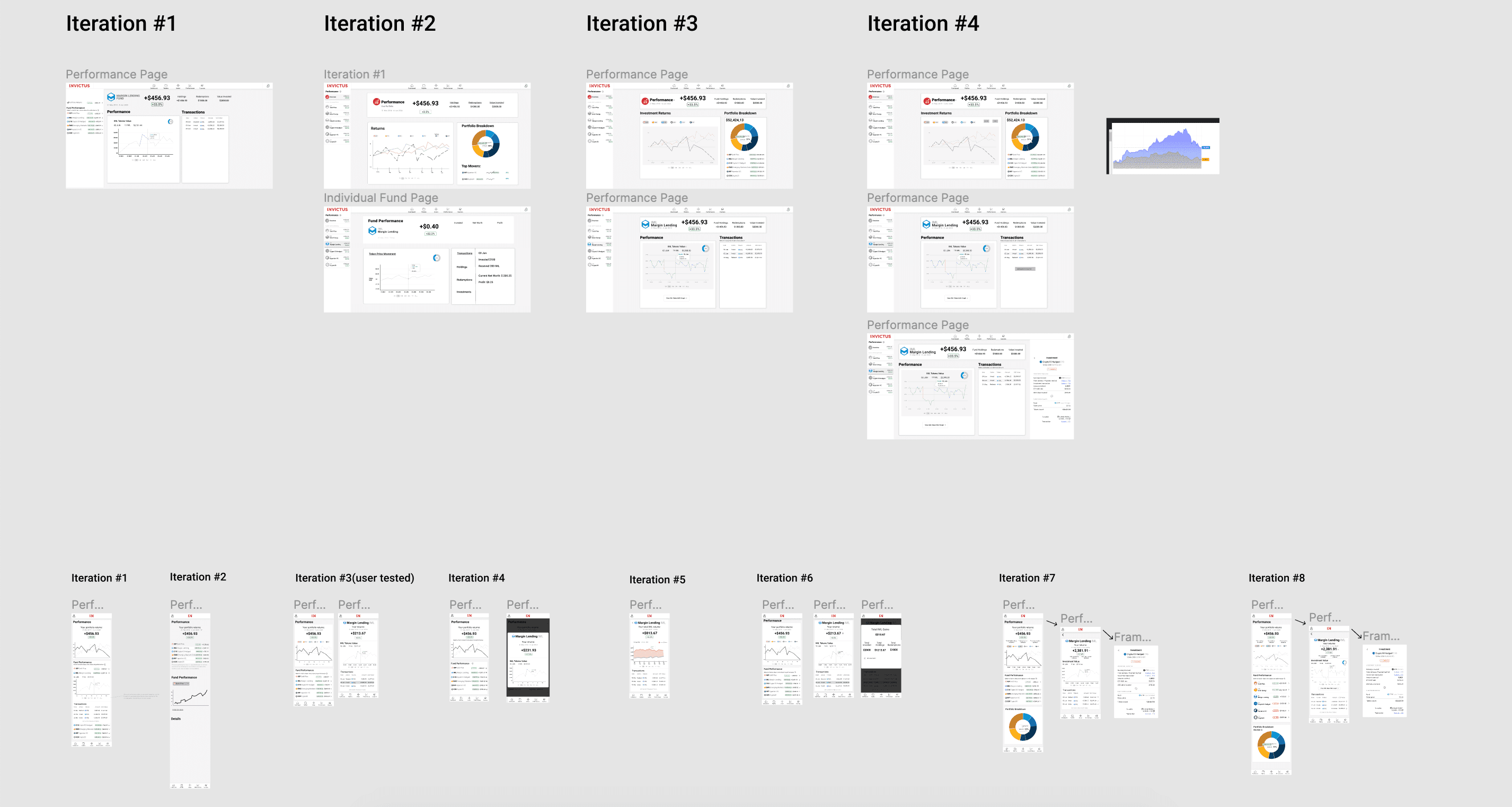
We explored multiple wireframe directions, refined them through stakeholder reviews, and validated the designs through hands-on testing with real users.

We explored multiple wireframe directions, refined them through stakeholder reviews, and validated the designs through hands-on testing with real users.

We explored multiple wireframe directions, refined them through stakeholder reviews, and validated the designs through hands-on testing with real users.

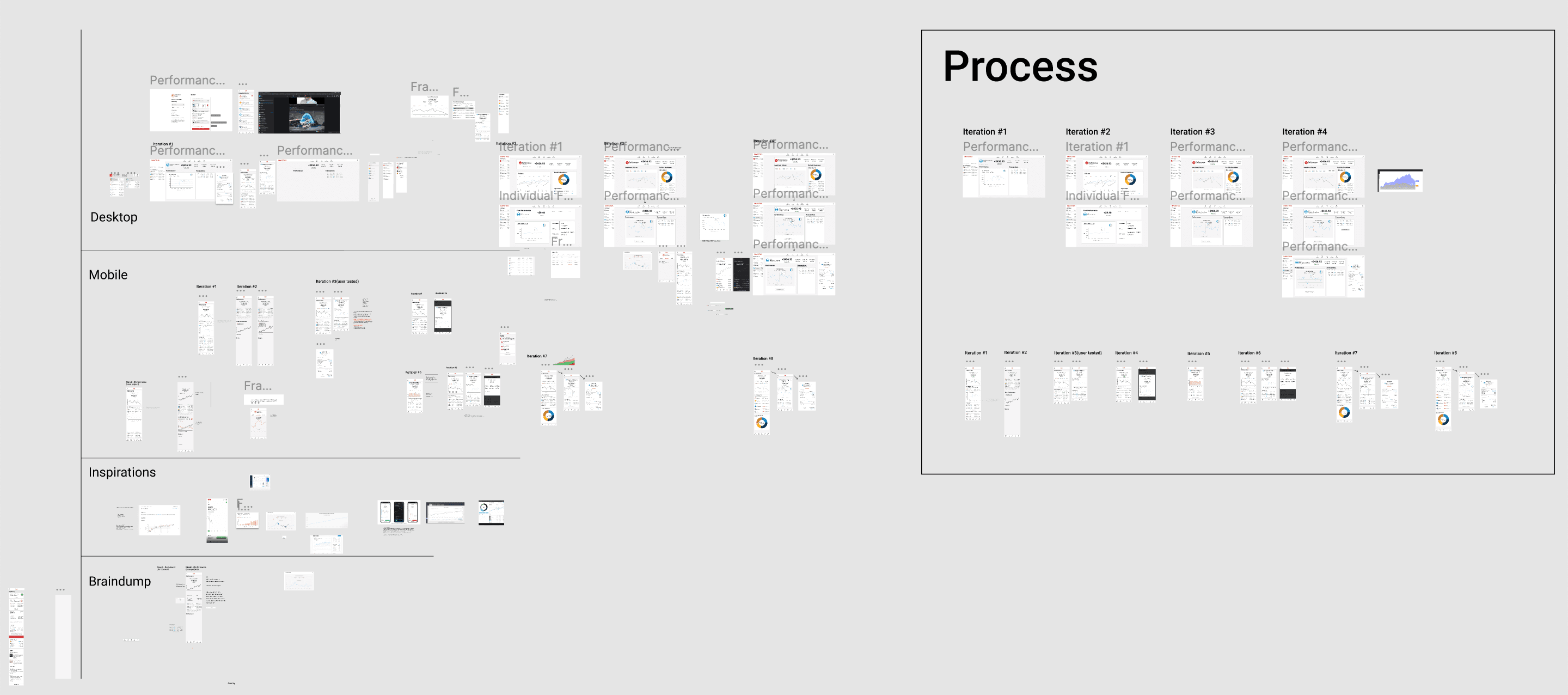
After several rounds of design refinement, we reviewed the wireframes with the PM and co-founders to ensure the designs aligned with business goals and met accessibility, security, and regulatory expectations before moving into testing. Our user testing was primarily qualitative. Over several days, we spoke directly with existing users, gathered their impressions, and observed them as they completed tasks in the prototype. This helped us surface both small points of confusion, like unclear visual cues, and larger issues such as navigation clarity and feature expectations.

After several rounds of design refinement, we reviewed the wireframes with the PM and co-founders to ensure the designs aligned with business goals and met accessibility, security, and regulatory expectations before moving into testing. Our user testing was primarily qualitative. Over several days, we spoke directly with existing users, gathered their impressions, and observed them as they completed tasks in the prototype. This helped us surface both small points of confusion, like unclear visual cues, and larger issues such as navigation clarity and feature expectations.

After several rounds of design refinement, we reviewed the wireframes with the PM and co-founders to ensure the designs aligned with business goals and met accessibility, security, and regulatory expectations before moving into testing. Our user testing was primarily qualitative. Over several days, we spoke directly with existing users, gathered their impressions, and observed them as they completed tasks in the prototype. This helped us surface both small points of confusion, like unclear visual cues, and larger issues such as navigation clarity and feature expectations.

Initial User Frustrations

Initial User Frustrations

"I want to be able to compare fund performance to overall returns"

"I want to be able to compare fund performance to overall returns"

"I want to be able to compare fund performance to overall returns"

"Is my portfolio diversified enough?"

"Is my portfolio diversified enough?"

"Is my portfolio diversified enough?"

"It's not currently clear if the spike is a result of an increase of value or a deposit"

"It's not currently clear if the spike is a result of an increase of value or a deposit"

"It's not currently clear if the spike is a result of an increase of value or a deposit"

"I want a better transaction history to easy doing taxes"

"I want a better transaction history to easy doing taxes"

"I want a better transaction history to easy doing taxes"

Positive User Feedback

Positive User Feedback

“I like being able to overlay the different graphs”

“I like being able to overlay the different graphs”

“The dashed lines make it look like there is missing or invalid data”

“The dashed lines make it look like there is missing or invalid data”

“I love how I’m able to hover over any point in the graph to see more”

“I love how I’m able to hover over any point in the graph to see more”

“I never thought of comparing fund performances to overall growth”

“I never thought of comparing fund performances to overall growth”

“I don’t know much about this stuff, so I like how prominent the gain percentage and dollar amounts are”

“I don’t know much about this stuff, so I like how prominent the gain percentage and dollar amounts are”

“I like being able to overlay the different graphs”

“I love how I’m able to hover over any point in the graph to see more”

“I don’t know much about this stuff, so I like how prominent the gain percentage and dollar amounts are”

“The dashed lines make it look like there is missing or invalid data”

“I never thought of comparing fund performances to overall growth”

SOLUTION

SOLUTION

SOLUTION

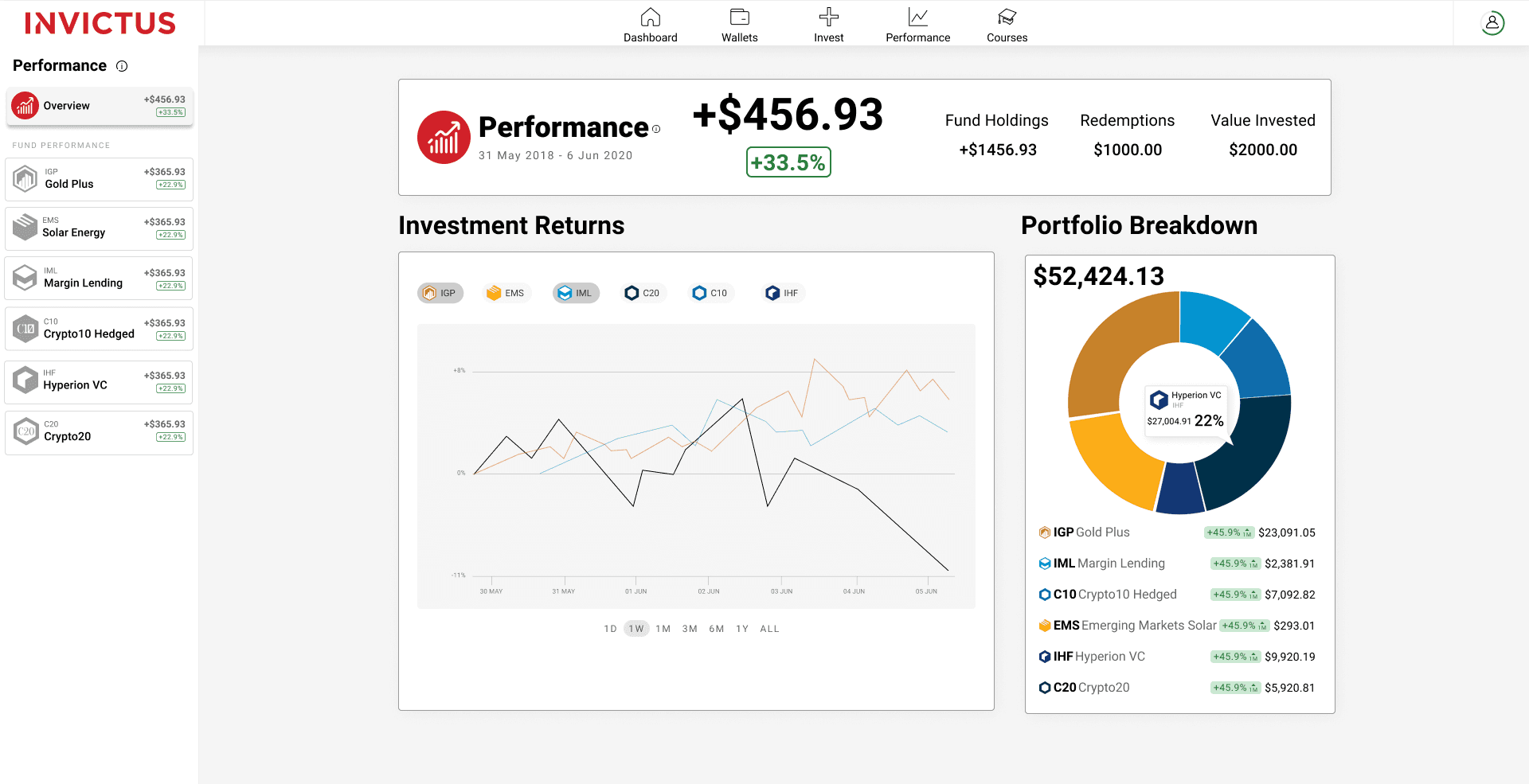
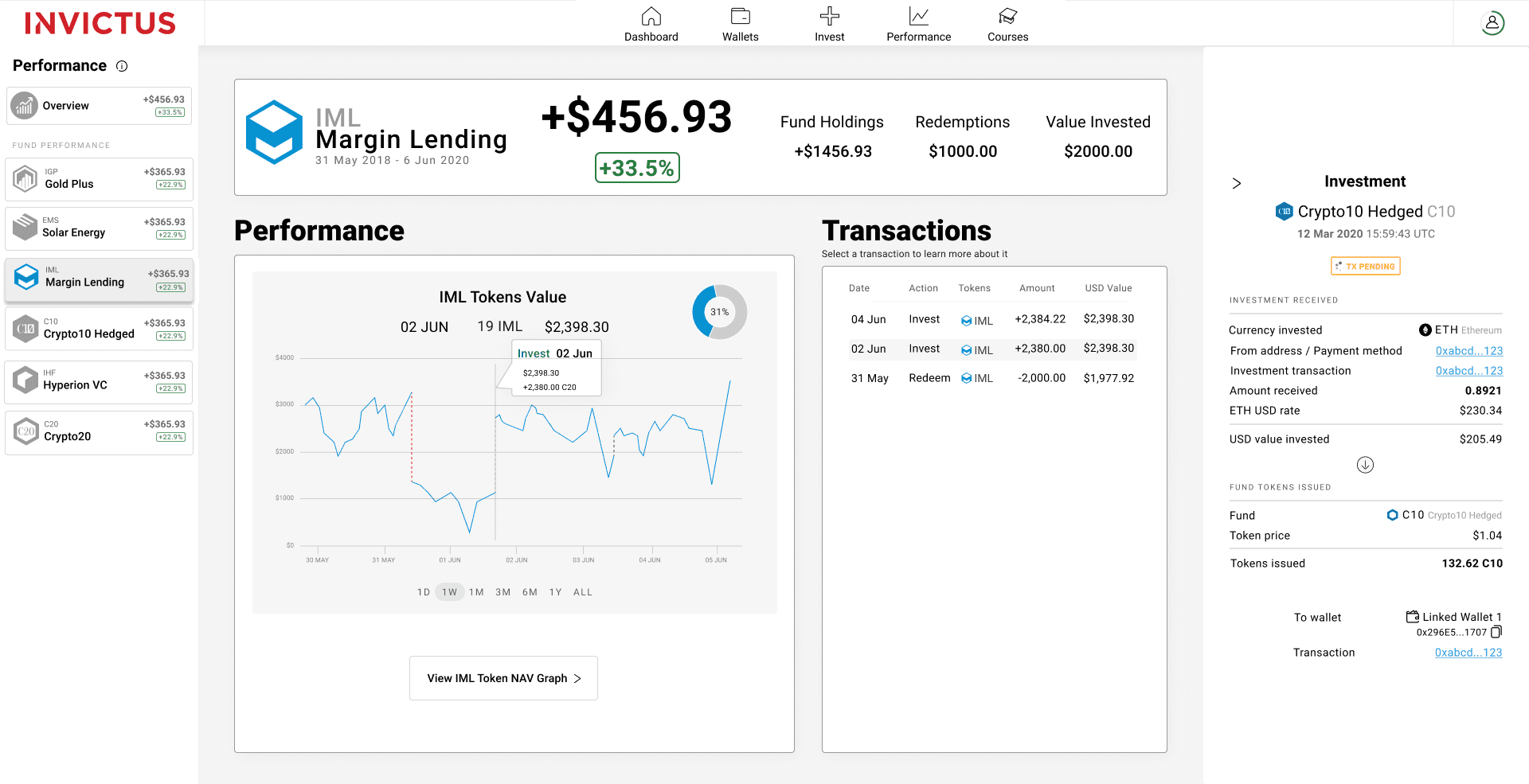
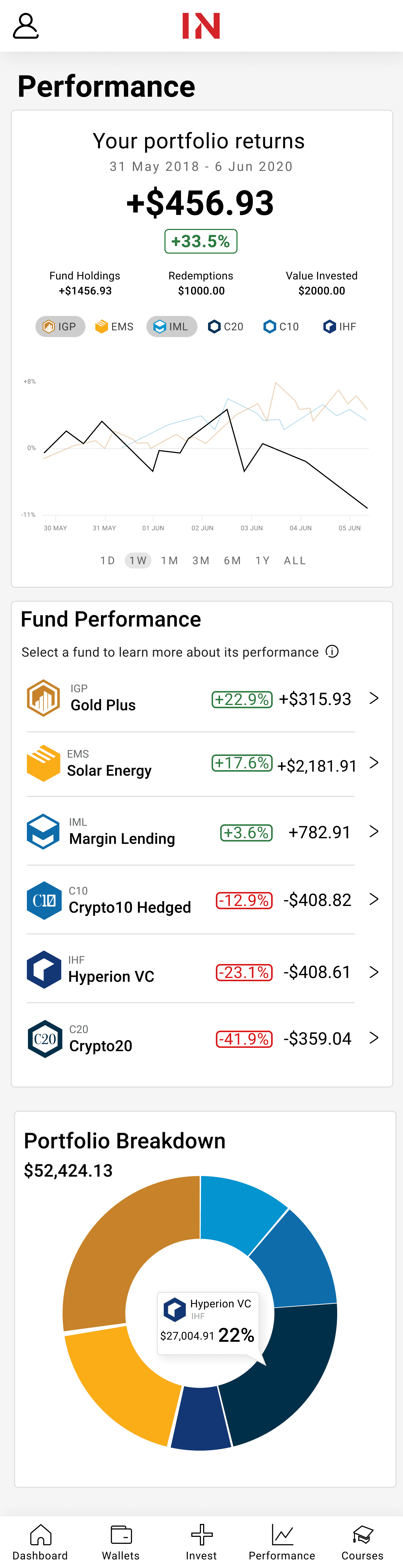
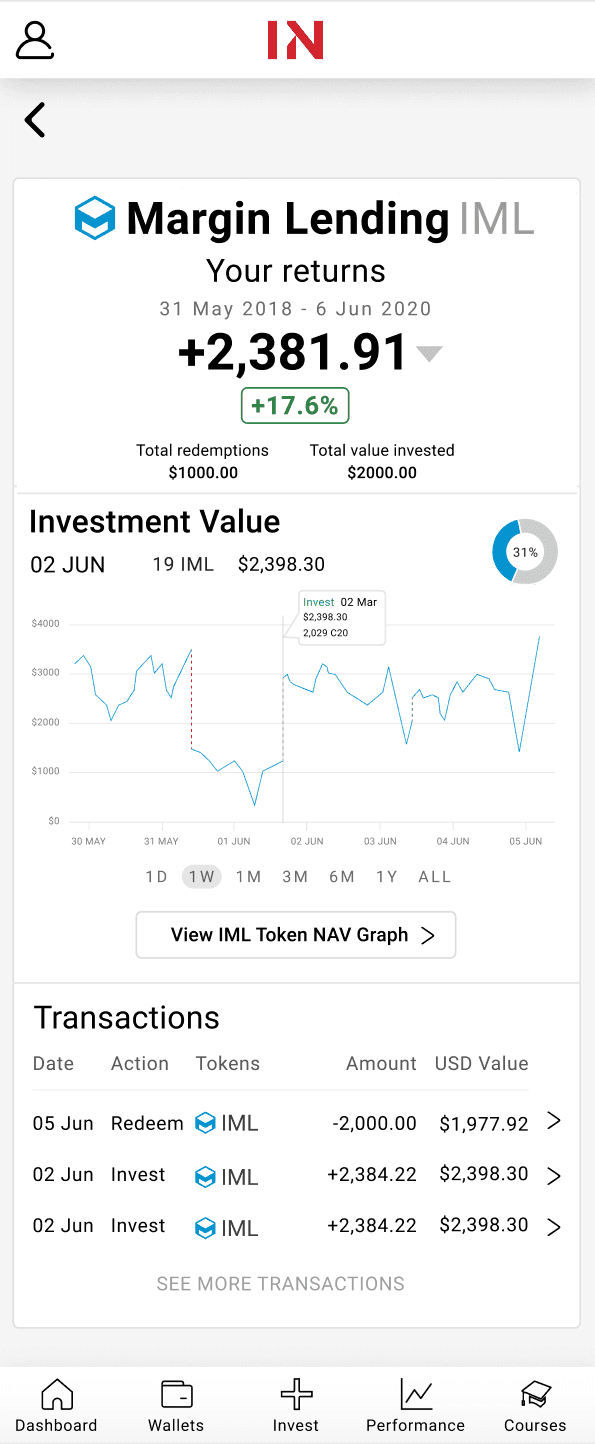
The final dashboard gives investors a clear overview of their funds with one-click access to deeper details, and presents transactions in a receipt-style format that mirrors real-world references. We partnered closely with developers to ensure the designs were feasible and supported by clear implementation guidelines.

The final dashboard gives investors a clear overview of their funds with one-click access to deeper details, and presents transactions in a receipt-style format that mirrors real-world references. We partnered closely with developers to ensure the designs were feasible and supported by clear implementation guidelines.

The final dashboard gives investors a clear overview of their funds with one-click access to deeper details, and presents transactions in a receipt-style format that mirrors real-world references. We partnered closely with developers to ensure the designs were feasible and supported by clear implementation guidelines.

REFLECTIONS

REFLECTIONS

REFLECTIONS

Looking back, I really enjoyed this project and the responsibility the designers had. It was great working within a company that really understands the importance and impact that good design can have on a system and the general user experience. The visual appeal is important, but with this, the functionality is arguably more important. With many financial applications providing comparable features, it’s the user experience and intuitive interface that can sell a potential user on the platform. I learned about myself as a designer and what I enjoy working with. Being a numbers guy at heart, it was great to work on a data visualization and dashboard project.

Looking back, I really enjoyed this project and the responsibility the designers had. It was great working within a company that really understands the importance and impact that good design can have on a system and the general user experience. The visual appeal is important, but with this, the functionality is arguably more important. With many financial applications providing comparable features, it’s the user experience and intuitive interface that can sell a potential user on the platform. I learned about myself as a designer and what I enjoy working with. Being a numbers guy at heart, it was great to work on a data visualization and dashboard project.

Looking back, I really enjoyed this project and the responsibility the designers had. It was great working within a company that really understands the importance and impact that good design can have on a system and the general user experience. The visual appeal is important, but with this, the functionality is arguably more important. With many financial applications providing comparable features, it’s the user experience and intuitive interface that can sell a potential user on the platform. I learned about myself as a designer and what I enjoy working with. Being a numbers guy at heart, it was great to work on a data visualization and dashboard project.