Highchair Insert

Highchair Insert

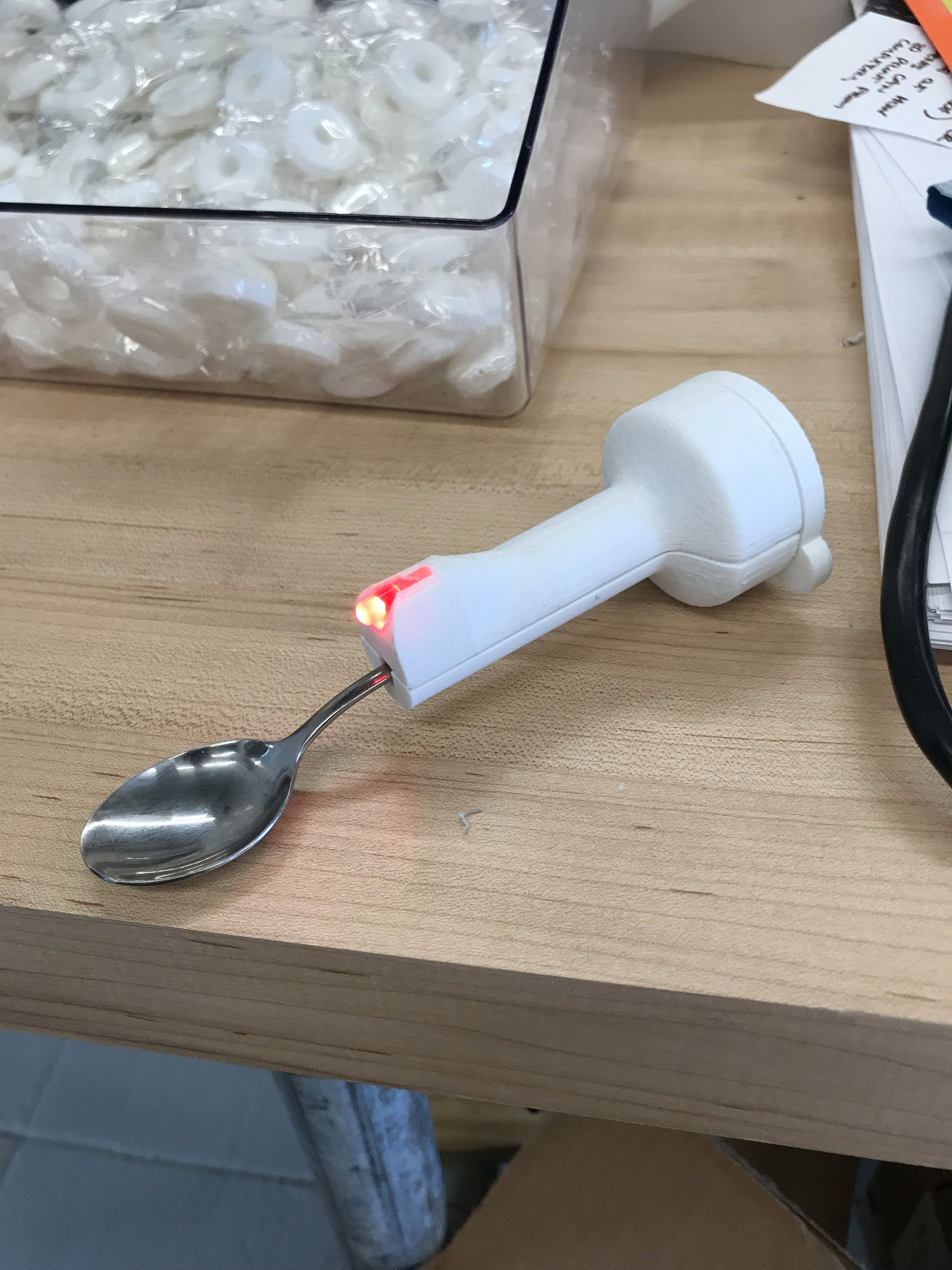
I worked with Yehuda, a young boy with Microcephaly, along with his mother and therapists to create an insert for his current highchair that did not meet his needs. I also a special spoon with an LED.

I worked with Yehuda, a young boy with Microcephaly, along with his mother and therapists to create an insert for his current highchair that did not meet his needs. I also a special spoon with an LED.

Year

2018

Materials

Cardboard, Vinyl Fabric, PLA Plastic

Platform

Fusion 360

OVERVIEW

OVERVIEW

OVERVIEW

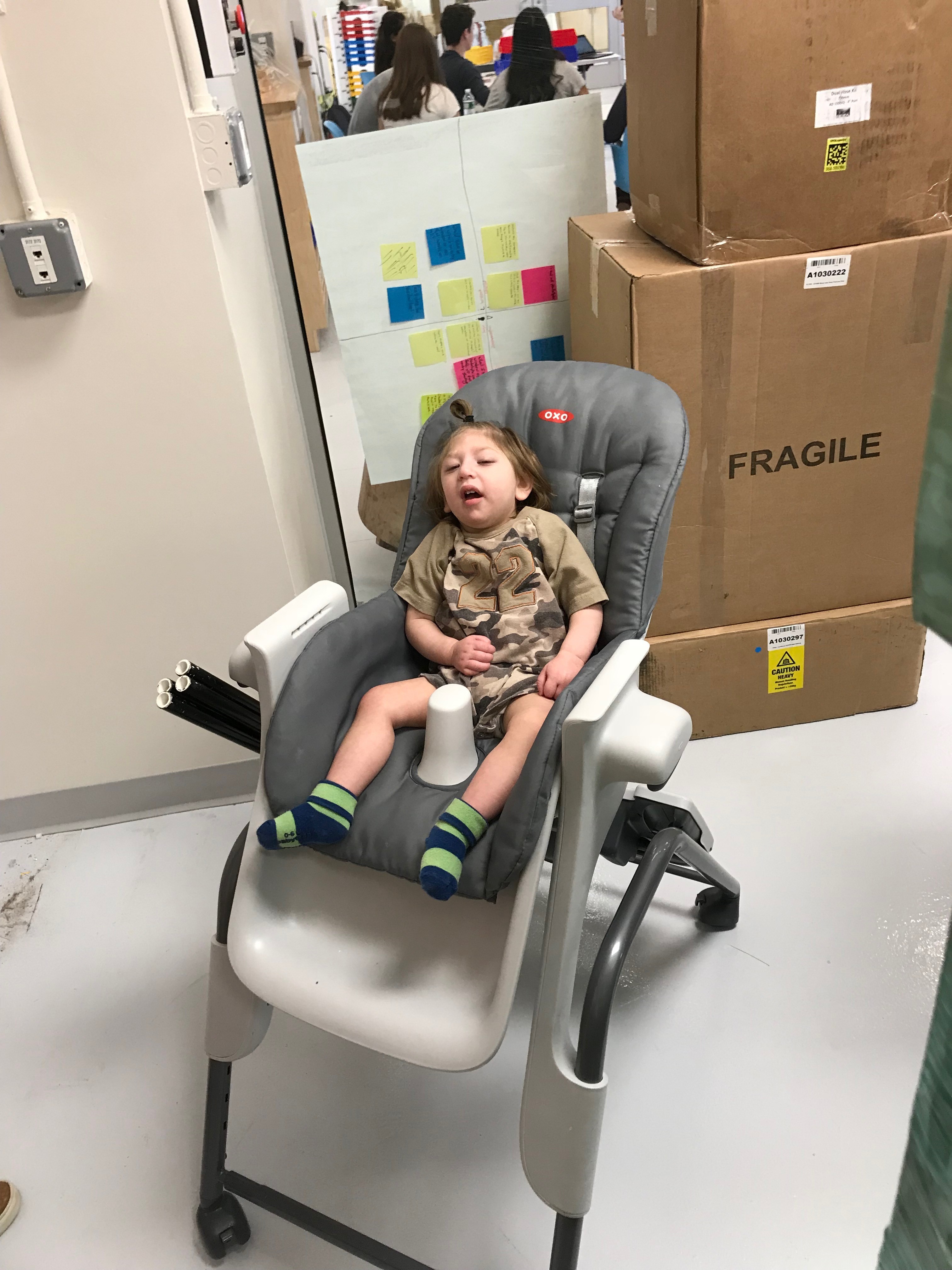
Yehuda has Microcephaly and Cortical Visual Impairment. As seen below in his original high chair, he is clearly too small for the chair, so he tends to slouch over and cannot keep his body upright. Over the course of this project, I went through four full-size prototypes (along with many smaller ones for various parts of the chair) as I met with the family every few days to offer my newest ideas and to gather the mother and therapists' feedback. I learned that the design process is not about designing a fancy product; it's about designing with and for the user to meet their needs. I gained skills and learned about many design aspects throughout this project: sewing, 3D modeling and printing, user feedback, the iterative design process, and more.
Yehuda has Microcephaly and Cortical Visual Impairment. As seen below in his original high chair, he is clearly too small for the chair, so he tends to slouch over and cannot keep his body upright. Over the course of this project, I went through four full-size prototypes (along with many smaller ones for various parts of the chair) as I met with the family every few days to offer my newest ideas and to gather the mother and therapists' feedback. I learned that the design process is not about designing a fancy product; it's about designing with and for the user to meet their needs. I gained skills and learned about many design aspects throughout this project: sewing, 3D modeling and printing, user feedback, the iterative design process, and more.

Yehuda has Microcephaly and Cortical Visual Impairment. As seen below in his original high chair, he is clearly too small for the chair, so he tends to slouch over and cannot keep his body upright. Over the course of this project, I went through four full-size prototypes (along with many smaller ones for various parts of the chair) as I met with the family every few days to offer my newest ideas and to gather the mother and therapists' feedback. I learned that the design process is not about designing a fancy product; it's about designing with and for the user to meet their needs. I gained skills and learned about many design aspects throughout this project: sewing, 3D modeling and printing, user feedback, the iterative design process, and more.

PROTOTYPES

PROTOTYPES

PROTOTYPES

The Mission

The final deliverable would assist Yehuda to comfortably sit upright in his chair. The challenge with this project was to create a flexible design that could grow with him so it could be used throughout his childhood.

The Mission

The final deliverable would assist Yehuda to comfortably sit upright in his chair. The challenge with this project was to create a flexible design that could grow with him so it could be used throughout his childhood.

The Mission

The final deliverable would assist Yehuda to comfortably sit upright in his chair. The challenge with this project was to create a flexible design that could grow with him so it could be used throughout his childhood.

First Prototype: Low Fidelity

A basic prototype was created to show the mother how to hip inserts would work.  A simple velcro system would allow the padding to be removed at any time.
First Prototype: Low Fidelity

A basic prototype was created to show the mother how to hip inserts would work.  A simple velcro system would allow the padding to be removed at any time.

First Prototype: Low Fidelity

A basic prototype was created to show the mother how to hip inserts would work.  A simple velcro system would allow the padding to be removed at any time.

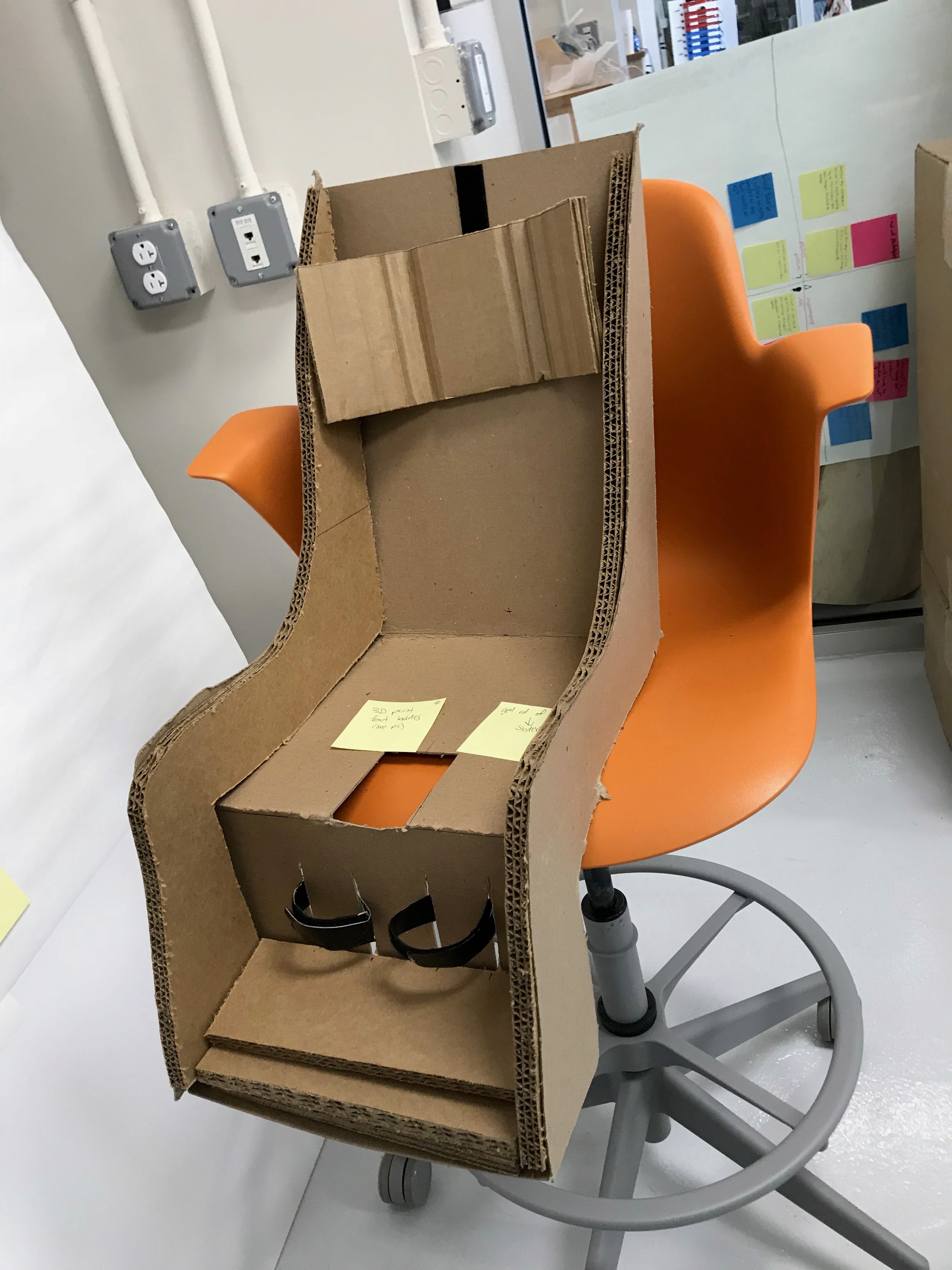
Second Prototype: Medium Fidelity

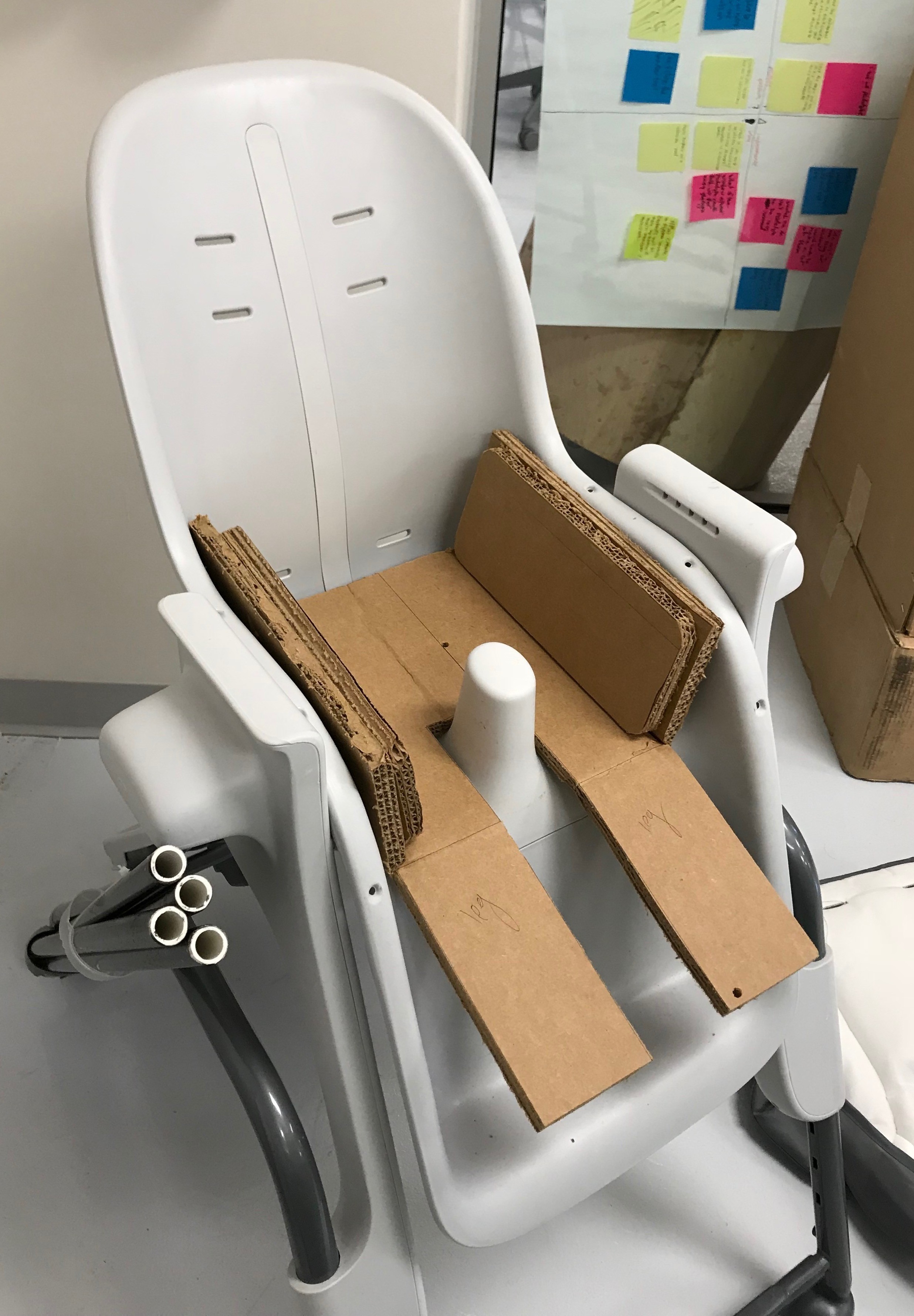
This prototype allowed me to test various neck/head support options along with the leg support. Triple-ply cardboard is a great way to prototype in an easy, fast, and cheap way.
Second Prototype: Medium Fidelity

This prototype allowed me to test various neck/head support options along with the leg support. Triple-ply cardboard is a great way to prototype in an easy, fast, and cheap way.

Second Prototype: Medium Fidelity

This prototype allowed me to test various neck/head support options along with the leg support. Triple-ply cardboard is a great way to prototype in an easy, fast, and cheap way.

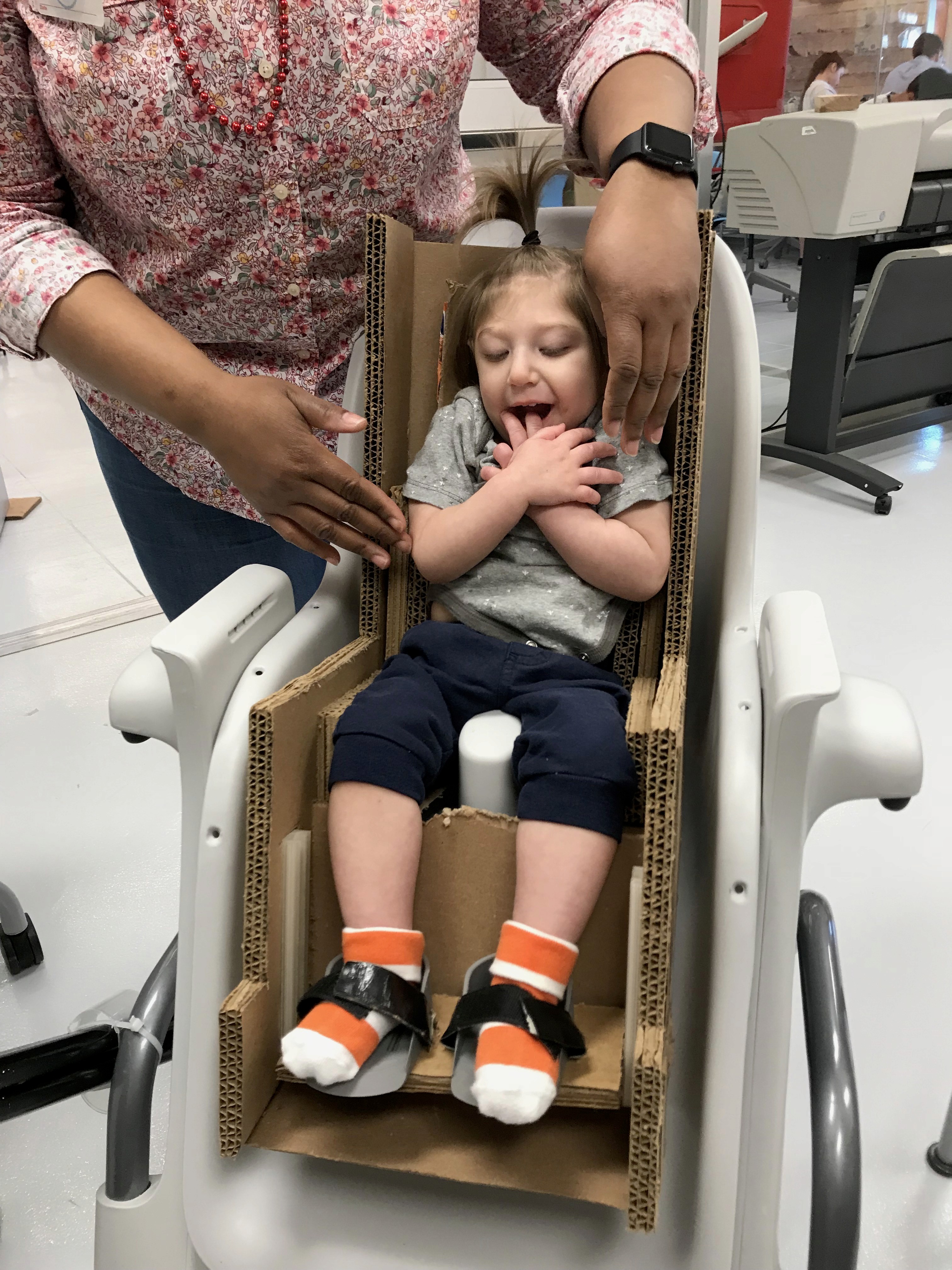
Third Prototype: High Fidelity

This final prototype with Yehuda in it allowed for final feature testing and sizing changes.
Third Prototype: High Fidelity

This final prototype with Yehuda in it allowed for final feature testing and sizing changes.
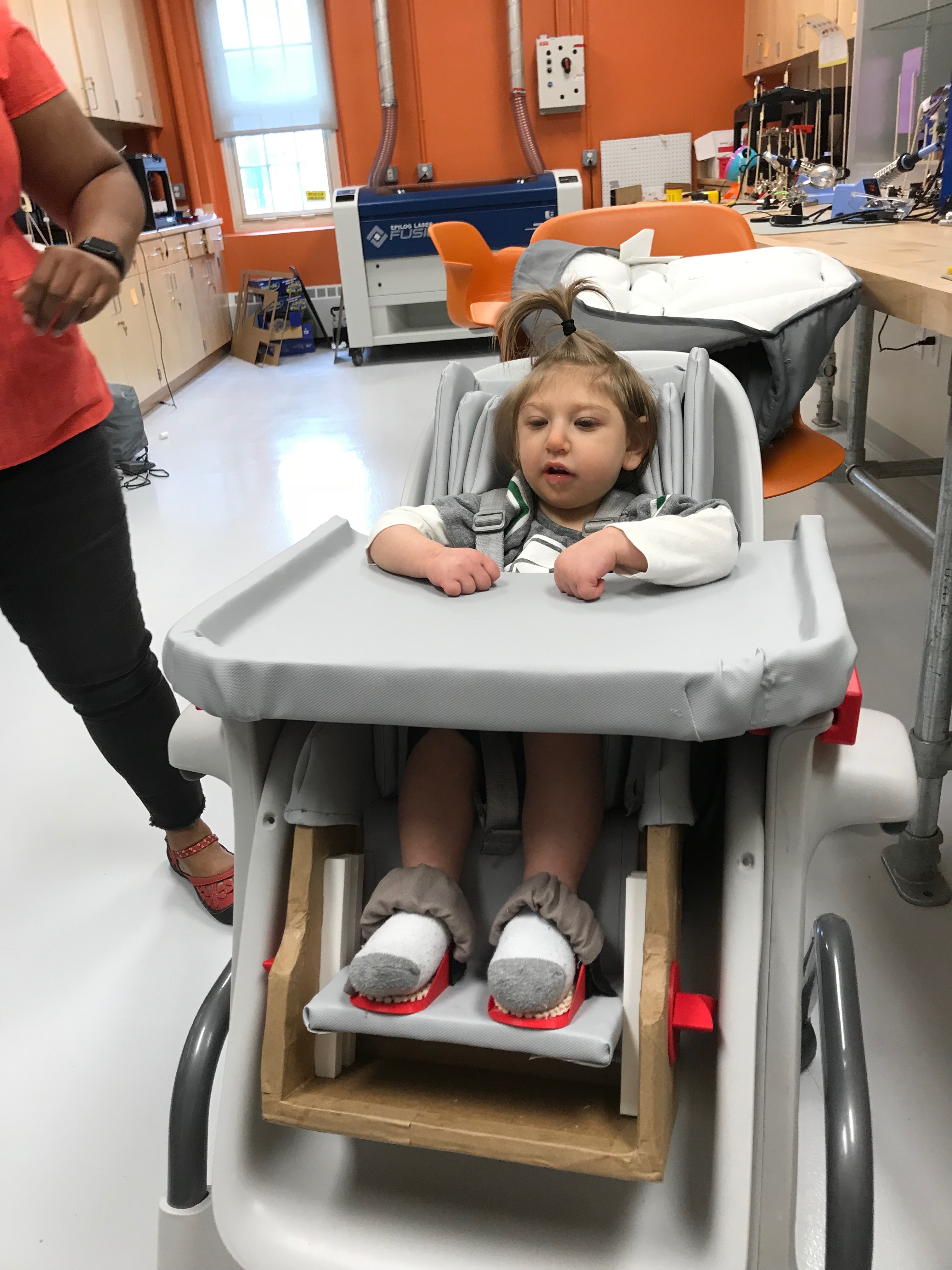
Third Prototype: High Fidelity

This final prototype with Yehuda in it allowed for final feature testing and sizing changes.
FINAL PRODUCT

FINAL PRODUCT

FINAL PRODUCT

LED SPOON

LED SPOON

LED SPOON

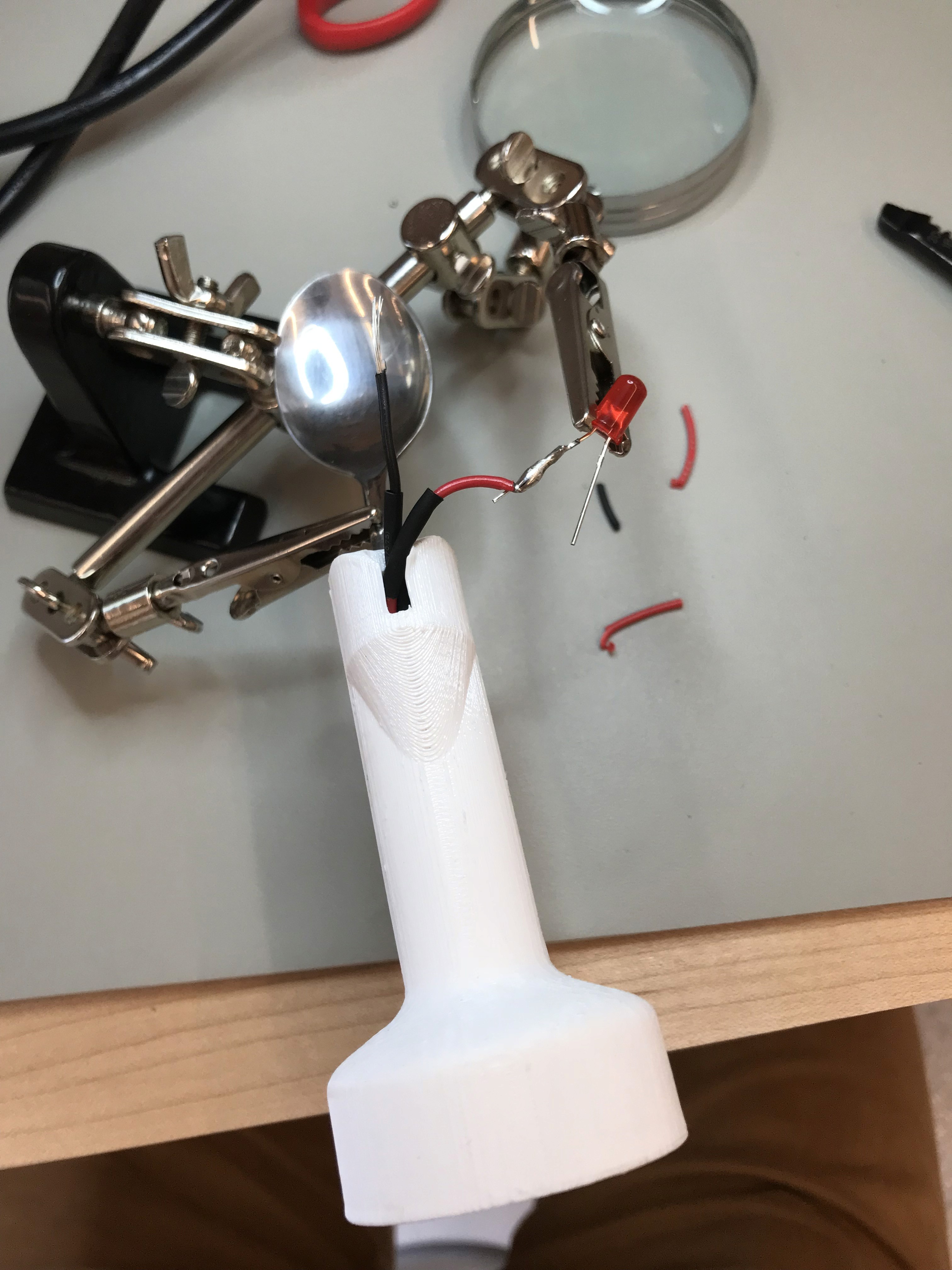
I designed, 3D printed, and assembled a custom LED-integrated utensil attachment to support Yehuda’s feeding therapy. To address his challenges with locating and tracking utensils, I engineered this solution to provide a high-contrast visual guide, allowing him to focus on the tip of the utensil and engage more effectively in the learning process. The clamshell design opens for easy cleaning of both the utensil and the attachment.

I designed, 3D printed, and assembled a custom LED-integrated utensil attachment to support Yehuda’s feeding therapy. To address his challenges with locating and tracking utensils, I engineered this solution to provide a high-contrast visual guide, allowing him to focus on the tip of the utensil and engage more effectively in the learning process. The clamshell design opens for easy cleaning of both the utensil and the attachment.

I designed, 3D printed, and assembled a custom LED-integrated utensil attachment to support Yehuda’s feeding therapy. To address his challenges with locating and tracking utensils, I engineered this solution to provide a high-contrast visual guide, allowing him to focus on the tip of the utensil and engage more effectively in the learning process. The clamshell design opens for easy cleaning of both the utensil and the attachment.